

The Crown of Andes/ La Corona de los Andes
- gem_head

- Sep 18, 2019
- 3 min read
Updated: Sep 18, 2019


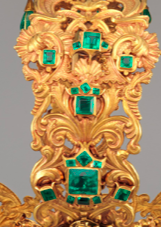


Quick Facts:
Origin: New Granada (now Colombia)
Designed for: Popayán’s iconic life-sized statue of the Virgin Mary
Year of fabrication: 1593 - 1599
Coronation Date: December 8, 1599
All components were mined in Columbia
Gold alloy (18 - 22 Karat)
443 emeralds weighing 846.15 carats
Largest emerald being a 24 carats known as the "Atahualpa Emerald"
Total weight estimated at 5.3lbs
The story of the Crown of Andes
Although historically Emeralds date back to Ancient Egypt, gem quality emeralds weren’t discovered until the mid 1500s. Therefore, unlike rubies and sapphires, emeralds weren’t featured in European Court Jewels. Soon after the discovery of the Muzo and El Chivor mines in Columbia, fine emeralds were highly sought after. Over the years, Emeralds have become more and more popular, today, a fine emerald is extremely rare and valuable.
The most extraordinary emerald jewel in existence today is the “Crown of Andes” la Corona de los Andes. This crown isn’t an ordinary royal jewel, it was made to adorn Popayan’s iconic life-sized statue of the Virgin Mary, Our Lady of the Immaculate Conception.
Like many ancient objects that have survived the test of time, the Crown of Andes has an incredible story to tell. Over the past 420 years, the crown has had many protectors, owners, have survived multiple counts of theft.
In the early1590s, smallpox epidemic broke out in the surrounding areas east of Ecuador to Columbia. Many of these surrounding villages didn’t survive the devastating plague. Popayan, however had managed to survive, in fact was not affected by the epidemic at all. The people of Popayan beloved this was a miracle performed by the divine Virgin Mary. The Bishop of Popayan commissioned the crown as an offering of gratitude to the Virgin Mary. People of all walks of life in Popyan is said to have contributed by donating the gold, emeralds and their labor to over six years to complete the crown.
Stories indicate the cathedral was raided frequently by pirates, treasure-hunters and thieves, it is said to have been stolen twice, but returned each time. To protect the crown and ensure its safety, a group of nobleman from Popayan formed the ‘Confraternity of the Immaculate Conception’. It is believed the crown was dismantled into several parts and hidden at different locations by members of the Confraternity of Immaculate Conception to safeguard it.
In 1936, the Confraternity of the Immaculate Conception, under instruction from Pope Pius X of Popyan, sold the Crown of Andes to American businessman Warren J. Piper for $125,000. In 1963 Piper’s family auctioned the crown through Sotheby’s for $154,000. The Crown of Andes was privately owned until its acquisition by the MET in 2015.
Today, the Crown of Andes sits at its forever home in the American Wing of the MET Museum in NYC.
"The "Crown of the Andes" is considered one of the most important surviving examples of goldsmith work from colonial Spanish America. Notable for its rarity, richness, and exquisite craftsmanship, the crown represents the most distinctive artistic achievement of a locale whose wealth derived from the mining of gold and emeralds.”
Ronda Kasl
Curator: The American Wing, Metropolitan Museum of Art
References:
Crown of Andes. (2014, March 16). Retrieved from https://tiarasandtrianon.com/2014/03/16/crown-of-the-andes/
Crown of the Virgin of the Immaculate Conception, known as the Crown of the Andes. (n.d.). Retrieved from https://www.metmuseum.org/art/collection/search/21698
The Crown of the Andes | MetCollects [Video file]. (2016, February 23). Retrieved from https://www.youtube.com/watch?v=GZZlvOf4RCQ&feature=youtu.be
Gift of the Queen of Heaven. (2016, December 27). Retrieved from https://silkroadtreasuresblog.weebly.com/articles---en/gift-of-the-queen-of-heaven
Met acquires Crown of Andes. (2015, December). Retrieved from http://www.thehistoryblog.com/archives/39760


Comments